

Survival Theater
Love Island, layoffs, and the end of backstage life

I’m 26, and everyone I know is teetering on the edge, clinging to jobs that might evaporate in the next round of layoffs or stuck waiting on a call back that’s probably not coming. With all the geopolitical chaos, stalled social mobility, and this weird mix of body dysmorphia combined with conservative ideas about sensuality, you wouldn’t expect a reality show full of meticulously curated 20- and 30-somethings to hold any real answers. And yet somehow, Love Island USA Season 7 has become the unlikely backdrop for all of this chaos. Friends who usually don’t watch reality TV are now locked in on the conversation.
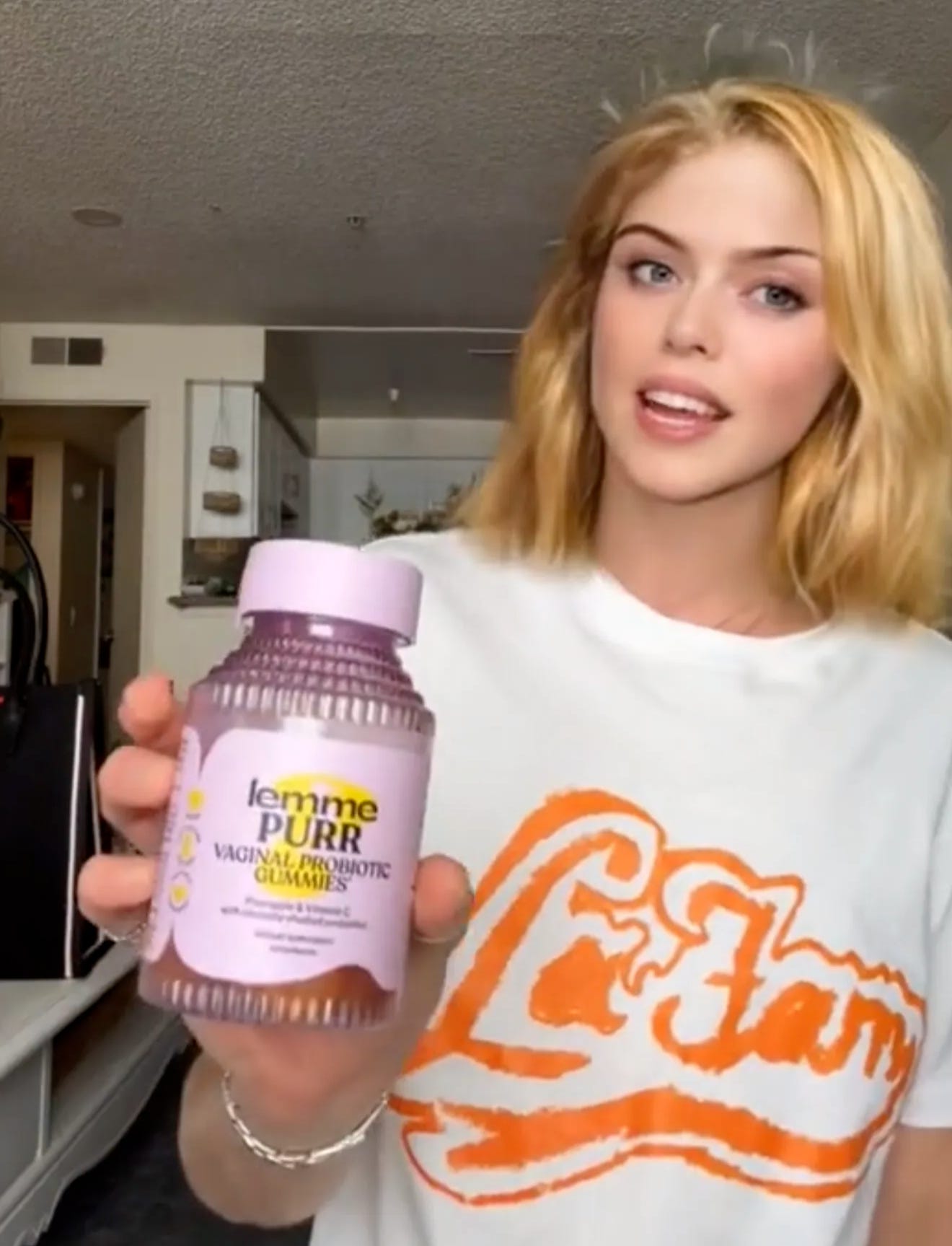
This season has over 623 million views on TikTok, nearly double the US population. People are watching, voting, commenting, duetting. It feels participatory, but really it is a system. A system deciding who gets picked, who gets paid, and who gets turned into an Instagram story selling Lemme gummies.
Romance as resume
Love Island started in the UK with celebrities. In 2015, it swapped those celebrities for everyday people and introduced a cash prize. Suddenly the show became more interactive, the stakes higher, and the audience more invested. The U.S. version only really took off in Season 6, when some contestants turned into influencers and others became cautionary tales. Season 7 makes the stakes even clearer. The cast includes a med student, a pool boy, a trucker, a TikTok dance instructor, an elevator salesperson, nurses, and solo entrepreneurs. Their jobs matter less for what they are and more for what stories they tell. It’s more than dating, it’s a rebrand.
The $100k prize is a side piece, but the real win is narrative capital. If your story sticks, you score brand deals, followers, maybe even an agent. Everyone knows the script. Contestants aren’t just looking for love, they are crafting characters. It is less about authenticity and more about being easy to root for, remix, or hate. If you can't be transformed into a meme or viral clip for display on the cultural jumbotron, you're eliminated.
Building a personal brand and participating in the narrative economy has become a way to hedge against layoffs or automation. It’s a fast track to upward mobility. Millennials built the infrastructure, Gen Z turned it into an economy, and Gen Alpha is already coming up steeped in these rules. One in three students under 18 have been approached by a brand, or know someone who has, to promote a product online. Before they’re even old enough to work legally, they’re introduced to the value of performance. It’s no longer that “selling out” is shameful. It’s that the bar for what counts as selling out has moved, now that identity itself is seen as a primary vehicle for economic advancement.
The performance is the job
I’ve been reading The Presentation of Self in Everyday Life by Erving Goffman. One line in particular has stuck with me:
“When an individual plays a part, he implicitly requests his observers to take seriously the impression that is fostered before them.”
That framing feels more relevant now than ever. On TikTok, on LinkedIn, even in the office, people are not just doing tasks. They are managing impressions. Being convincing often matters more than being competent.
Goffman wrote about the distinction between a frontstage and a backstage version of self. Today, that backstage feels almost entirely collapsed. Between algorithmic feeds and return-to-office mandates, the expectation is constant visibility. If you are not visibly working, it is often assumed you are not working at all. In China, the job market has even produced services where people can pay to perform the act of going to work, just to avoid suspicion from family. The economic volatility is global. Everyone is performing all the time. And in many industries now, performance is not just part of the job. It is the job.
This same logic plays out in people documenting their layoffs. What started as "I got laid off" videos turned into entire content genres, including job hunt updates, interview outfit try-ons, and nostalgic office edits. Some people land jobs through these videos. Some land brand deals. The layoff itself becomes content. The content becomes the new job.
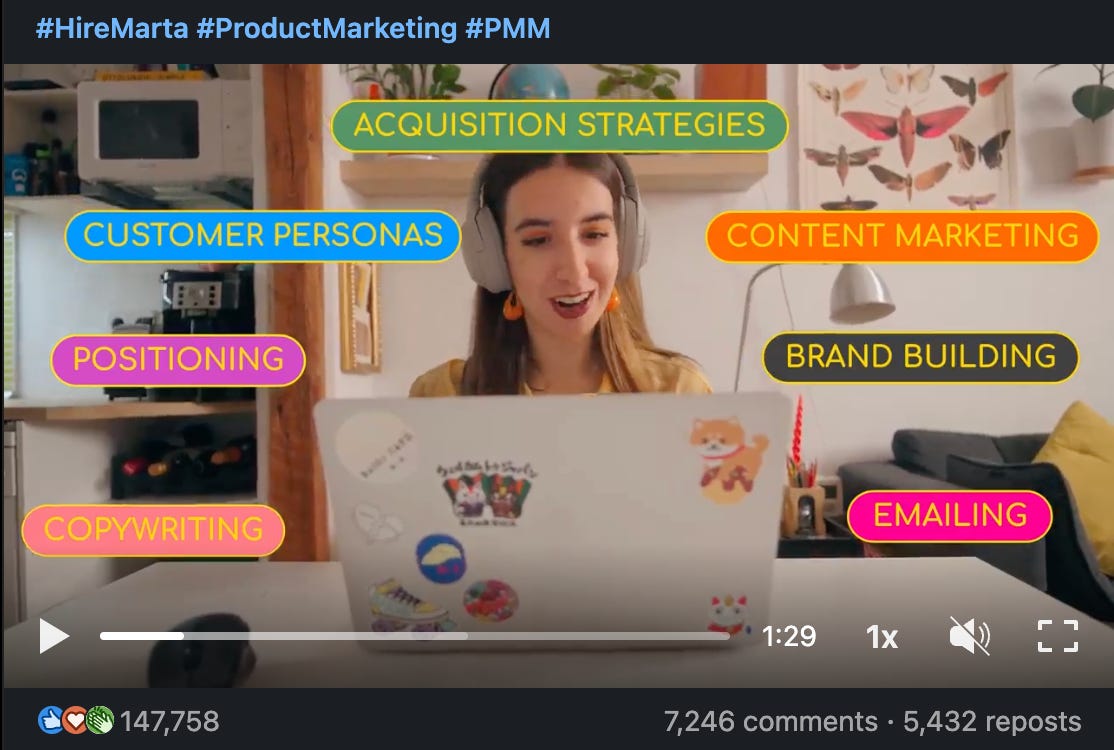
Even for those earnestly trying to find work, the flooded post-layoff market has turned LinkedIn into a stage where identity and labor collapse. Toby Shorin’s essay Life After Lifestyle captures this merging, showing how lifestyle demands shape labor so deeply that personal identity performance is inseparable from work itself. In this economy, producing a polished, emotionally driven video or post is not just storytelling but a necessary act of survival. You are not just job hunting, you are performing the identity of someone who “belongs” and “deserves” to be hired. You are simultaneously the editor, copywriter, brand designer, and PR manager of your own public narrative.
Capitalism needs a meet-cute
Traditional career paths are eroding. Degrees are more expensive and often feel useless. Trade programs are being defunded. AI is creeping into every service role. What remains is the work of being seen. Love Island is not just escapism. It is training.
To get a sense of how people are navigating this shifting labor landscape, we made an open call to chat with folks about their experiences. A conversation of note with Matt Bourland stood out to us. Since graduating in 2020, Matt has held three full-time jobs, all of which ended in layoffs, and currently does marketing for a local running shoe store. Despite taking a pay cut, they find more fulfillment in this role thanks to greater decision-making authority, though it lacks benefits and does not feel like a “real career.” Their experience reflects growing disillusionment with traditional career paths, especially the impact of venture capital on job stability and motivation. Matt also shared how abrupt contract cancellations and an uncertain job market have pushed them toward freelance work and roles with more personal meaning.
Matt’s story captures a broader shift. Many professionals now find themselves expendable unless they rank among the top creatives. AI threatens to displace traditional white-collar roles by shifting capital access away from office workers, accelerating job loss and forcing a re-evaluation of what meaningful work looks like. This instability highlights the importance of finding joy and fulfillment in labor itself, not just hustling to survive. If we spend nearly a third of our lives working, it matters that work offers more than performance for visibility.
I recently saw The Materialists, a movie that explores how love and partnership have become negotiations of class, aesthetics, and survival. The film ends with Dakota Johnson’s character choosing the poor theater guy played by Chris Evans over the wealthy man with leg lengthening surgery played by Pedro Pascal (couldn’t be me btw, I’m team Pedro). Her decision is framed as emotionally authentic, but it feels more like a wistful fantasy than a reflection of how dating and class actually play out today. In a world where people are straddled with economic burdens and facing decreased class mobility, her choice feels out of step with reality. It seems less about genuine connection and more about fulfilling a personal vision of what love should be. She is not simply navigating a relationship, she is performing a role shaped by idealism that no longer matches the tone of the time.
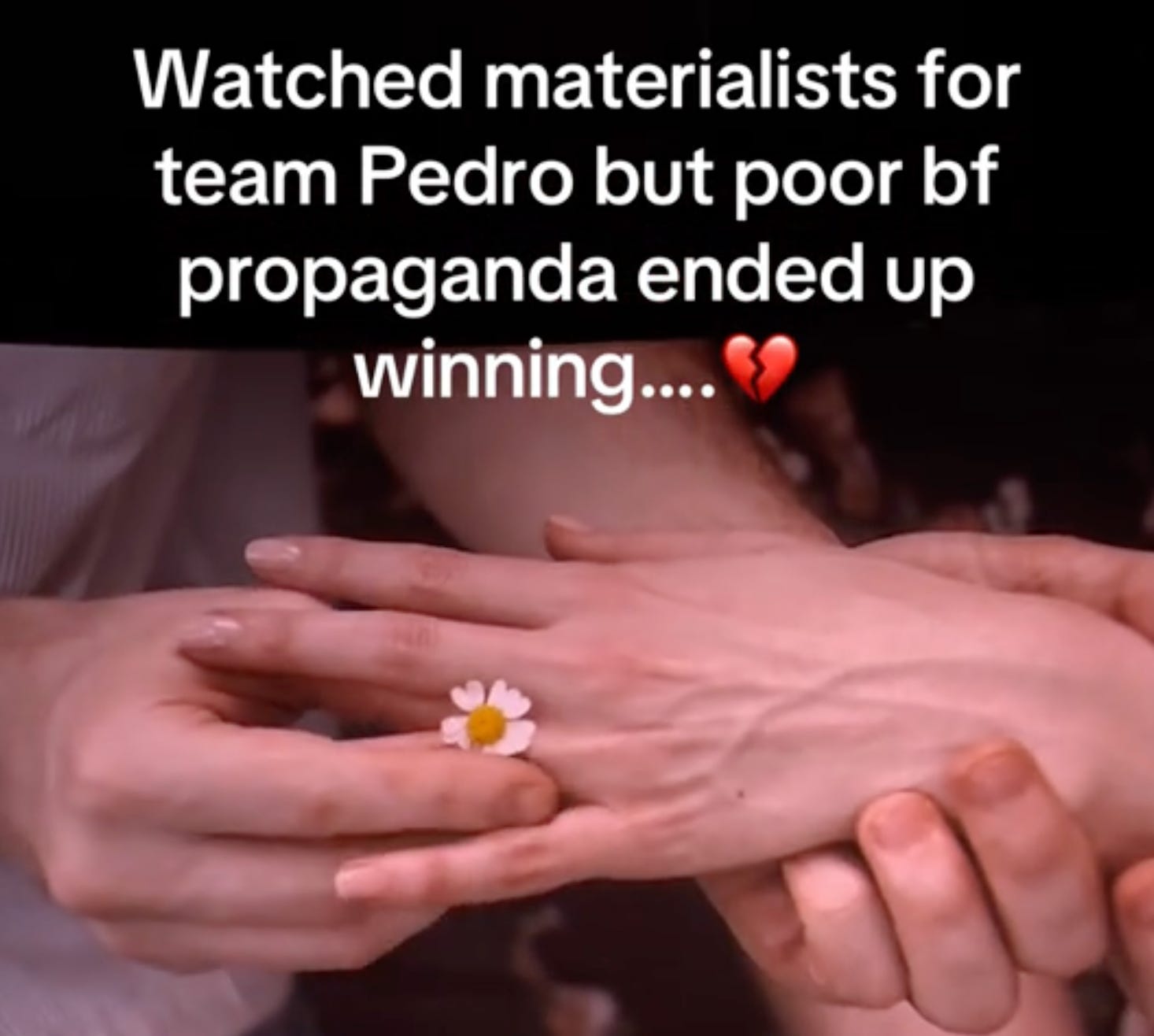
Like Matt’s journey, this shows how charm and brand potential often outweigh authentic connection. Both The Materialists and Love Island reveal that love, like work, are relationships entangled with performance and economics. The neat endings we want rarely match the messy truths we live.
Perhaps the future is not about choosing between idealized options but about building something real in the gaps between. Just as Matt seeks fulfillment beyond corporate instability and fleeting visibility, we all face the challenge of finding meaning, connection, and joy in a world that demands constant performance.
Troupe Economies of Scale
Building a platform as an individual is no small task, and the market for solo creators feels increasingly crowded. In response, people are forming troupe-like startups: small, collaborative ventures where visibility and labor are shared across a close-knit team. These collectives divide their time between the public performance of building and the practical labor of execution. It’s a kind of troupe economy of scale, where momentum is built not by a single person but by a coordinated group, amplifying each other’s reach and output.
In software, where Amazon developers now compare their roles to factory work, it is no surprise that would-be FAANG talent is carving out new paths. Rather than competing for positions in an oversaturated tech job market, they are using visibility as currency to raise capital and build their own opportunities. Cluely is a prime example.
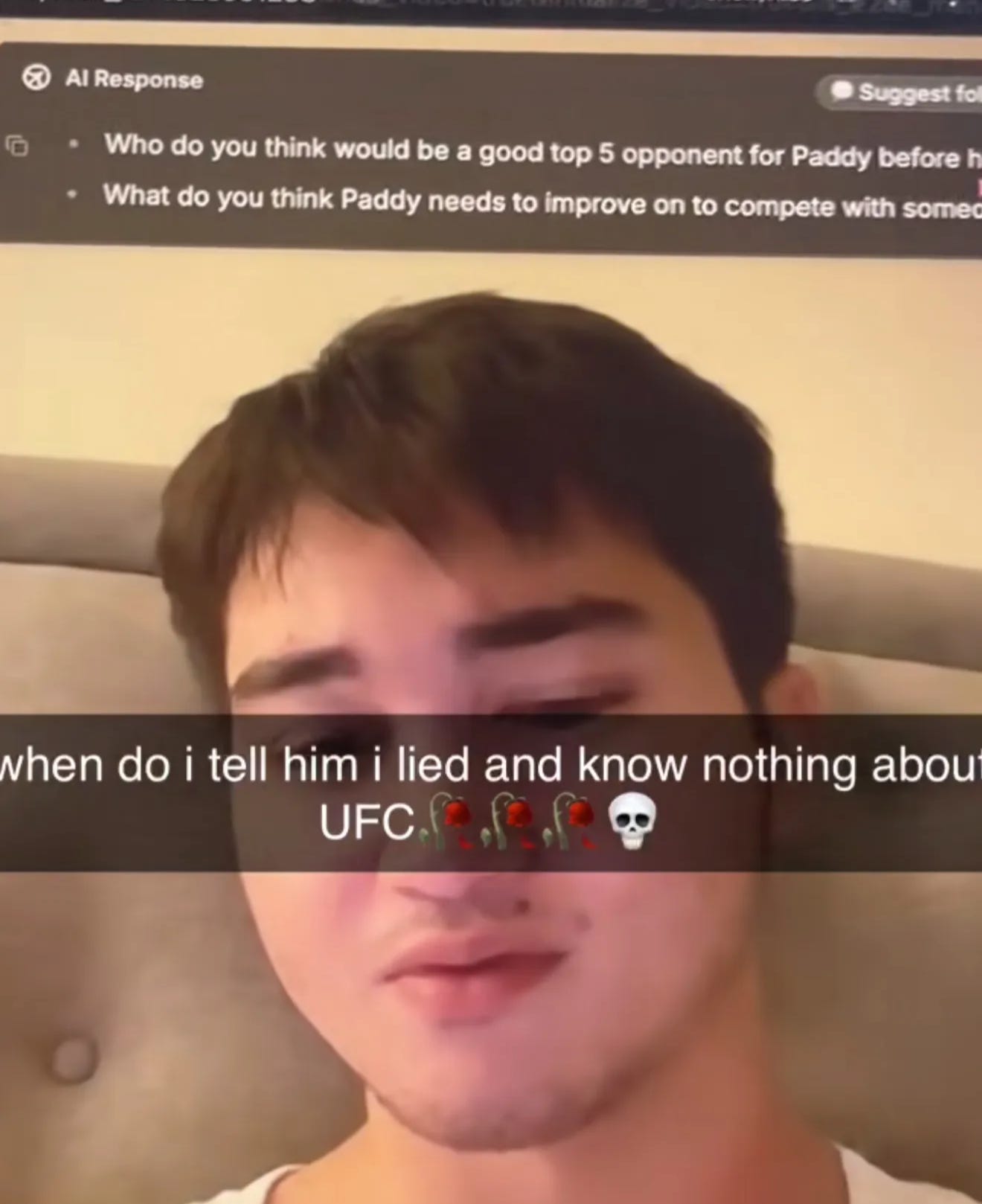
Cluely is a product designed to help users “cheat on everything.” The team treats virality as infrastructure. In just 10 weeks, they raised $15 million by using momentum as their moat. Cluely embraces controversy and speed, asking team members to either build the product or become content. The goal is to increase cultural capital and, over time, improve valuations. Everyone on the team is an independent contractor, living together in a setup that resembles a content house. The model moves quickly, rewards hustle, and transforms attention into capital.
Their promotional content leans into scripted scenarios designed to provoke. Viewers often respond with questions like, “Why would anyone use this?” That confusion is intentional. The spectacle generates urgency. Watching someone else cheat the system makes the product feel both ridiculous and essential. It invites viewers to make a quick decision: if everyone else is cheating, maybe I should too. In that moment, cheating feels like fairness. Cheating becomes equity.
Sky High Farm, on the other hand, builds visibility by rooting into place. Committed to community-centered research and action, their work addresses urgent and long-term issues at the intersection of climate, agriculture, food access, and education. Rather than focusing on a single cause, they propose a dynamic model that connects nutrition security, economic and health disparities, and the history of structural, racial, and educational injustice.

Sky High extends the typical narrative around farming and agriculture into the space of art and culture. They host events, art shows, and panels, and offer opportunities for on-farm volunteering and fellowships. They also operate within the marketplace of fashion and lifestyle products, creating collaborative drops with emerging artists, established figures, and brands like Nike, Converse, and Tata Harper Skincare. In doing so, they turn mutual care into public imagination. The goal is not acceleration but cultivation. By framing every customer as a donor, they flip the model expected from institutions that typically rely on wealthy patrons to operate.
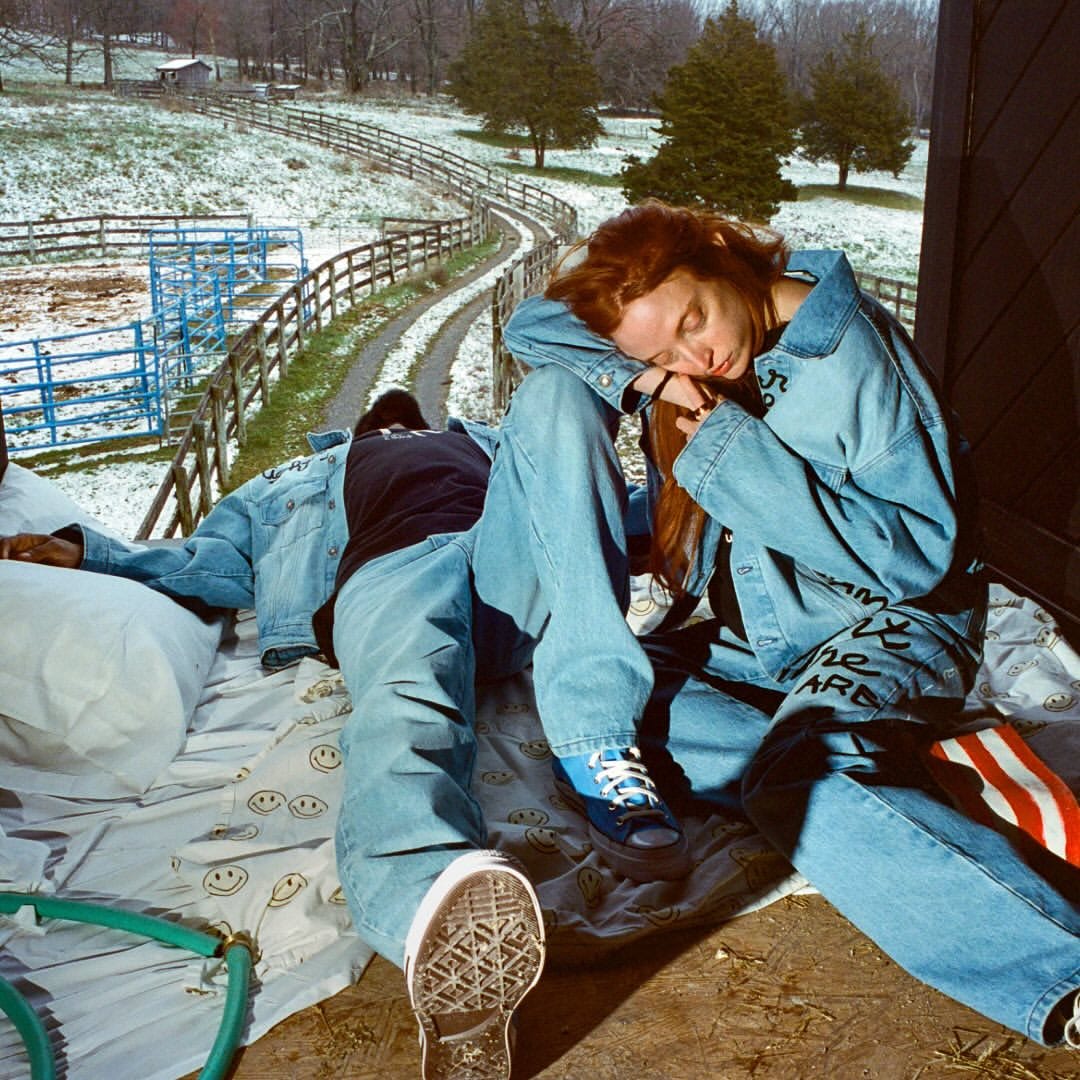
Both Cluely and Sky High reflect different expressions of troupe economies of scale. One relies on speed and the distribution of spectacle to capture attention. The other uses collaboration and care to build long-term systems. Neither path is inherently better, nor do they signal fixed values. Instead, they reflect different rhythms and strategies, fluid expressions of how a troupe might navigate the same reality: a world where visibility shapes access. Despite working differently, both approaches succeed because what matters most is turning attention into action.
Breaking character
We’re living in what feels like Survival Theater. Work looks like content. Content looks like work. Everyone is performing just enough to stay visible, just enough to stay afloat. If AI takes over the jobs that once paid rent, what fills the gap cannot be more platforms that reward spectacle. Something else has to emerge.
Living in a visibility economy is exhausting. Attention is a resource, but it is also a burden. The pressure to stand out alone wears people down. Over time, that pressure creates new incentives, not for individual stardom but for collective resilience. Not everyone can be a brand. Not everyone should have to be.
You can already see this shift taking shape. Metalabel’s proposal for Artist Corporations (A-Corps) bring artists together into shared creative companies. They pool resources, structure collective ownership, and build long-term value as a group. It is a move away from personal branding and toward shared infrastructure.
Danger Testing offers another model. They are a collective of app makers releasing experimental software in a seasonal format. The apps often feel like virality bait, but the point is not just attention. They treat the public stage of the internet as a test field. Rather than waiting on venture capital to green-light their ideas, they look to the community to come along for the ride.
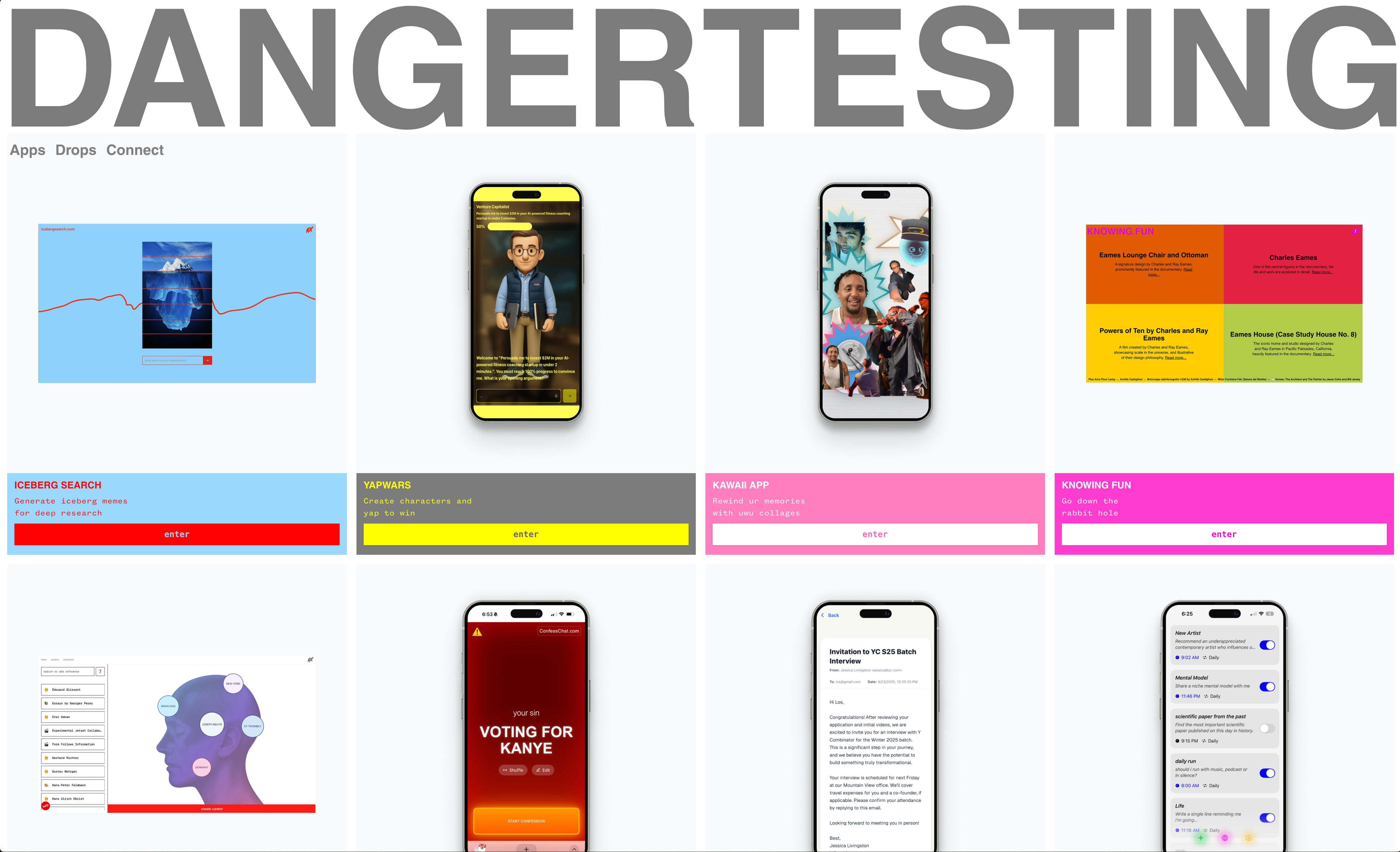
These projects hint at something different. The future of gaining visibility lies in troupes, teams and collectives who share the spotlight and the workload. They point toward a way of working that does not rely solely on hustle or spectacle but also embraces joy and meaning in the labor itself. Audiences can tell when people are not excited or interested in the work they do, which makes finding at least some pleasure in that work important not only for ourselves but for the connections we create. The future might not be about going viral. It might be about going together. A future where being seen means being supported. Where the story is not the job but the invitation. What comes next might not be a spotlight moment but a shared scene written and performed in real time by people who actually care.
 | A guest post by
|